From Vineyard to Screen: Directing Stem & Barrel: Napa Valley
Two months in Napa Valley. Three winemakers. One harvest. And a story that could only be told by being there.
In 2025, I set out to make a film about Napa Valley. Not simply about wine, but about the people, decisions, pressure and obsession behind it. The idea became Stem & Barrel: Napa Valley, a documentary I directed and executive produced through Dundas Media, following three of Napa Valley’s leading winemakers through one of the most important periods of their year: harvest. The finished film premiered nationally on Discovery Channel and Cooking Channel and streamed on discovery+, taking the story of the 2025 Napa harvest to audiences across the United States. But for me, the most interesting part of the project was everything it took to get there.
Finding the story in the harvest
Wine can be intimidating. There is an enormous amount of history, science and terminology surrounding it, but I didn’t want to make a film that required the audience to know any of that. I wanted to invite people into this world through story. Harvest gave us the perfect structure. Once the grapes are ready, the clock starts ticking. Decisions have consequences. Weather matters. Timing matters. And behind every bottle are people making hundreds of decisions that most of us will never see. We built the film around three wineries, three winemakers and three varietals, allowing us to move between different parts of Napa Valley while telling a much bigger story about craftsmanship, legacy and what it takes to make great wine. Wine Spectator later described the concept as “Chef’s Table for winemakers.” I love that description because it captures what we were trying to do. This wasn’t meant to be a technical film about wine. It was about the personalities, philosophies and human stories behind it.
Being there for every shot
We shot the documentary over an intensive two-month window during the 2025 harvest. And when I say we were embedded in harvest, I mean it. I was personally in the vineyards, wineries and cellars for every shoot — directing, producing and constantly looking for the moments that would ultimately become the film. We deliberately kept the production footprint streamlined. Using multi-camera Sony BURANO setups, we could work quickly and unobtrusively, combining a run-and-gun documentary approach with the cinematic visual language I wanted the film to have. The objective was always to let the winemakers exist in their world without us interfering with it. Sometimes that meant following a winemaker through the vines. Sometimes it meant being inside the winery as fruit arrived. And sometimes it meant simply recognizing that something interesting was happening and getting out of the way. The more invisible we could make the production, the more honest the film became.
Editing the film while we were still shooting it
This was also one of the most integrated production and post-production processes I’ve worked on. We didn’t shoot for two months, go home, and then start figuring out what movie we had.
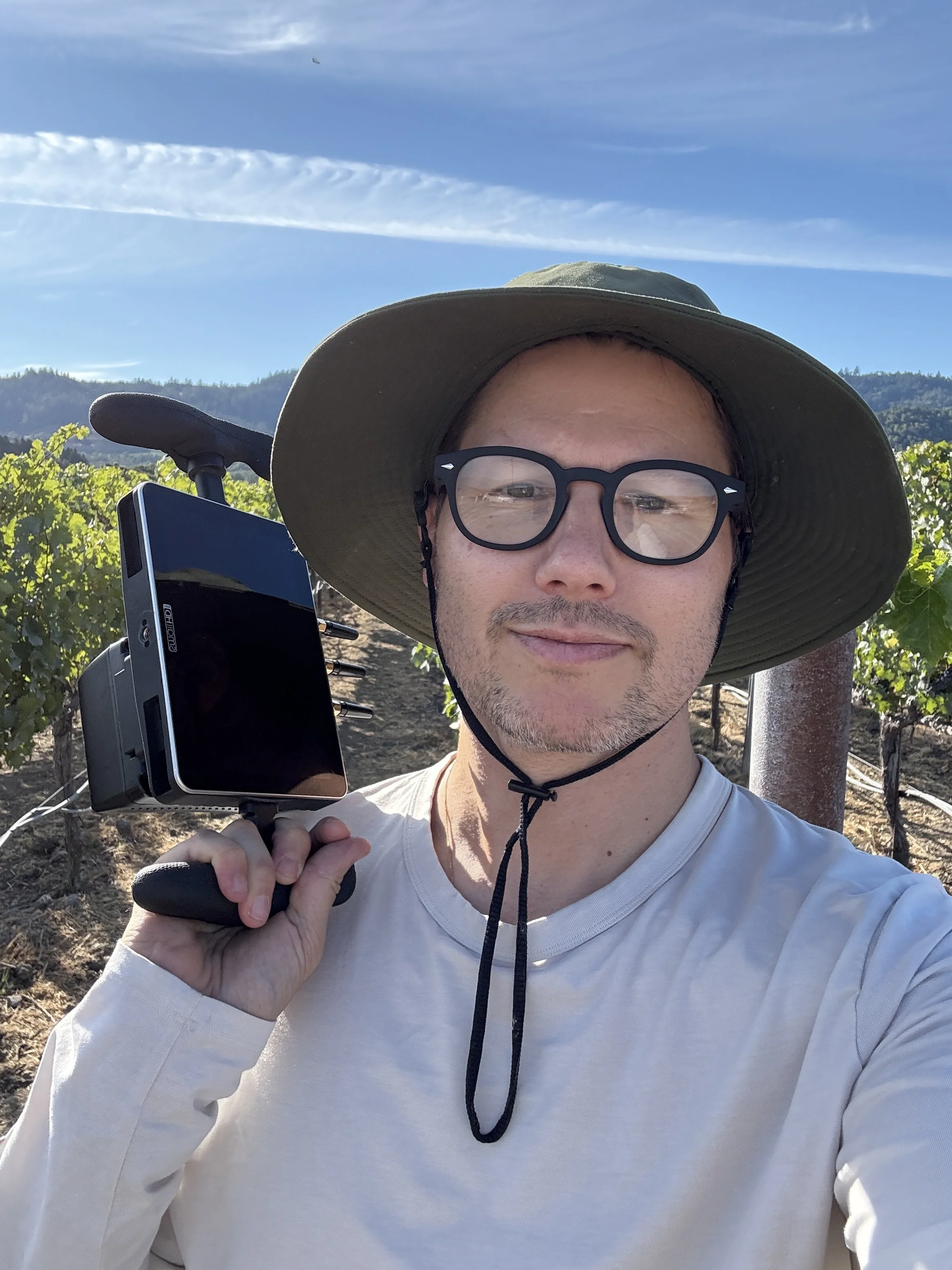
We were editing while we were filming.
Our post-production operation ran in tandem with production, using multiple high-powered Apple Mac Studio systems and Adobe Premiere Pro to handle the enormous amount of footage and multi-camera sequences we were generating. I worked across the edit throughout the shoot. That changed the filmmaking process completely. Every few days, we could see the story taking shape. We could identify which characters and themes were becoming important, recognize what we were missing, and take that knowledge back into the vineyard. The edit informed the shoot. And then the shoot informed the edit. For a documentary unfolding in real time, that became incredibly powerful.
We weren’t trying to impose a story on harvest. We were discovering the story as harvest happened. From Napa Valley to Discovery
I stayed with the film through every stage — developing and writing the story, directing the production, producing, working through the edit, and overseeing the final delivery. Eventually, thousands of individual decisions became one finished film. Stem & Barrel: Napa Valley premiered across Discovery Channel, Cooking Channel and discovery+, with Warner Bros. Discovery bringing the film to a national audience. And after spending so much time making the film in vineyards, edit suites and dark rooms staring at Premiere timelines, getting to finally watch it with an audience at the New York premiere was a pretty special full-circle moment.
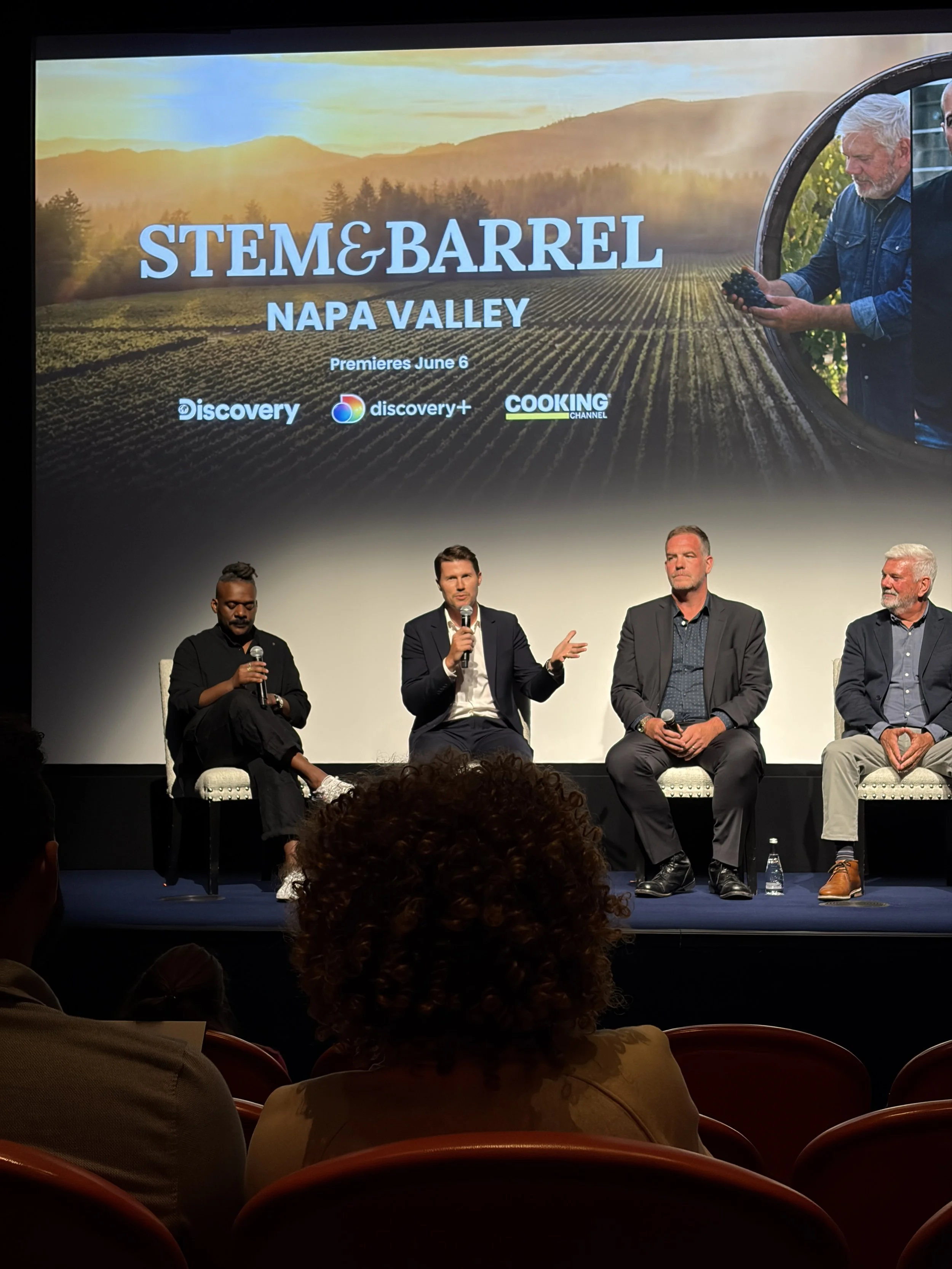
Vineyard to screen, literally. What I took away from it
I’ve produced television and branded entertainment for much of my career, but Stem & Barrel reinforced something I increasingly believe about storytelling: Access isn’t the story. People are. We had extraordinary access to Napa Valley and some remarkable wineries. We could photograph beautiful vineyards all day long. But beautiful pictures aren’t enough to sustain an hour of television. The film worked when we stopped thinking about wine as the subject and started thinking about the people who dedicate their lives to making it. That’s the part I hope audiences take away from Stem & Barrel. You don’t need to understand wine to understand craftsmanship, pressure, legacy, pride or the pursuit of getting something exactly right. And maybe after spending an hour with these winemakers, you’ll look at the next bottle you open a little differently.
Stem & Barrel: Napa Valley
Directed & Executive Produced by Jason Dundas
Produced by Dundas Media
Distributed by Warner Bros. Discovery